
Launching Your Bookstore: Online Training
Opening an independent bookstore is exciting. It also requires hundreds of decisions about space, inventory, fixtures, technology, staffing, displays, and marketing. Launching Your Bookstore helps turn those decisions into a practical opening plan.
The Bookstore Training Group created this online program for aspiring bookstore owners across the United States. Consider it the Bookstore Boot Camp.
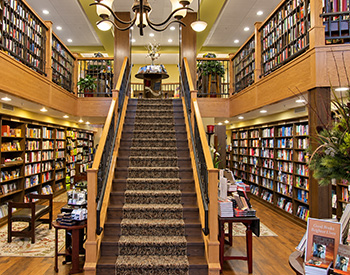 Launching Your Bookstore focuses on the work that begins after the business plan is completed and funding is in place. The training explains how to prepare a physical bookstore, design your space with an understanding of flexible fixturing, create a planogram, select books and non-book products, merchandise the store using staff and volunteers, select and set up your computerized systems (for POS, inventory management, CRM, and accounting), organize operations, and build customer interest before opening day. Whew!
What Will You Learn in Launching Your Bookstore?
Launching Your Bookstore covers the major decisions involved in preparing a bookstore for customers. The program includes guidance on:
- Creating a memorable bookstore design
- Choosing flexible fixturing
- Selecting and sourcing opening inventory
- Planning the store with a planogram
- Merchandising books, cards, toys, gifts, and other products
- Understanding the unique needs of bookstore computer systems
- Developing buying and pricing practices
- Driving traffic to the store
- Building a loyal customer base
- Organizing daily operations
A thought-filled bookstore operation is when all of these parts work together. For example, fixtures affect inventory capacity. Inventory choices shape displays. Displays influence how customers move through the store. Launching Your Bookstore helps owners understand and work with these connections.
Aspiring owners who are still developing their concept and financial projections can begin with Foundations for Success. If you’ve made the decision to open, the Bookstore Start Up Package combines the planning guide with both online training programs to give you what you need.
Launching Your Bookstore with a Practical Plan
 A bookstore opening involves more than ordering books and installing shelves. Owners must form the business legal entity, secure funding, evaluate locations, negotiate a lease, and meet local requirements to obtain a certificate of occupancy.
The U.S. Small Business Administration explains the general steps for choosing a business structure, registering a company, obtaining tax identification numbers, opening a business bank account, and applying for licenses or permits. Requirements vary by state and municipality. Owners should confirm the rules that apply to their location.
Launching Your Bookstore helps connect this broader business work with the needs of an independent bookstore. That bookstore specific focus helps new owners make informed decisions.
Design a Store That Supports Discovery
Good bookstore design supports browsing, customer service, events, and efficient work. It also makes the store feel welcoming and encourages discovery. When online purchasing is so easy, any retail store must provide a compelling reasons to come in. How it feels to be in a store is key.
Launching Your Bookstore introduces design strategies, an understanding of bookstore fixtures and the need for flexibility, traffic flow, focal point areas, and planograms. A planogram connects the store design and fixtures with merchandise categories. A planogram helps owners calculate inventory quantities.
Commercial grade bookcases are essential. They must safely carry heavy loads and withstand daily public use. Some fixtures should also be easy to move when a store changes displays or creates space for events. And, they must showcase your merchandise.
Owners who need customized planning can explore the company’s bookstore design services.
Build an Opening Inventory With Purpose
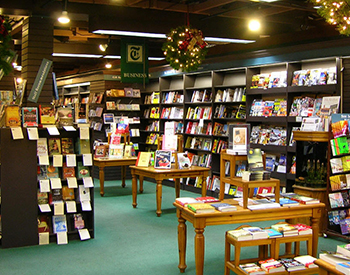 Millions of books are in print, so no new bookstore can stock everything. Launching Your Bookstore explains how to approach product selection, sourcing, buying, and pricing for the thousands of books that are needed to fill even the smallest space.
A useful opening inventory reflects the community, fits the available shelf space, presents planned specialties, and is within the bookstore’s opening inventory budget. It should also include new releases, staff favorites, current bestsellers and dependable backlist titles. The fixture plan and inventory plan should support each other.
The company also offers bookstore inventory planning for owners who want direct help selecting opening titles.
Bookstores that order electronically (a best practice) must use a Standard Address Number. Bowker explains the SAN system, which identifies organizations and addresses during ordering, billing, shipping, payment, and return transactions in the book industry.
Choose Technology with Book Industry Connectivity
Launching Your Bookstore also addresses the specific needs of a bookstore computer systems.
Many established bookstore management systems run on PCs, while some newer services operate in the cloud. A useful system should recognize ISBN and EAN product identifiers. It should also support the store’s ordering, receiving, inventory, point of sale, reporting, and ecommerce workflow.
Certain systems functions must be easy for frontline staff to learn and use.
Turn Displays Into Customer Invitations
Launching Your Bookstore explains how merchandising and marketing work together. Clear storefront windows and doors let people understand the store before they enter. A strong focal display can attract attention while preserving a clear view into the sales floor.
Around the store, face-out books, useful signs, table displays, and shelf displays help customers discover products. Visual clutter makes that discovery harder.
The company’s FREE 30-minute training video, Bookstore Merchandising Made Easy, shows how to apply key display strategies and is available to all who work in a bookstore.
Enroll in Launching Your Bookstore
Launching Your Bookstore is available online to aspiring booksellers anywhere in the United States.
Launching Your Bookstore provides focused guidance for moving from a planned concept to a store that is ready for books, staff, and customers.
The American Booksellers Association also provides independent booksellers with education, industry resources, advocacy, networking, and technology programs.
Launching Your Bookstore FAQs
How long will it take to open a bookstore?
If the space needs little renovation and funding is secure, allow at least three months.
This time may include store design, product planning, buying, fixture production, marketing, hiring, training, merchandising, computer installation, inspections, and obtaining a certificate of occupancy Renovations, financing, permits, and custom fixtures may extend the schedule.
What should I do first?
Choose an appropriate business structure and complete the required state or local registration for your business.
Then obtain the tax identification numbers and banking services. A bookstore will need a Standard Address Number (SAN) for book industry transactions.
Detailed design and fixture selection usually immediately follow securing retail space.
Where should I source fixtures?
Use vendors that provide commercial grade retail fixtures.
Book industry fixture specialists understand shelf load capacity, safe public use, book display requirements, mixed merchandising, portability, flexibility, aesthetics and can provide custom features.
Movable fixtures are essential when a store needs to create event space.
What technology do I need?
All bookstores need a point of sale and inventory management system, compatible hardware, payment processing, reliable internet service, and secure data backups.
Many established systems are PC based, while other systems are cloud based. Choose software that works with ISBN and EAN identifiers and supports ordering, receiving, inventory management, reporting, and customer relationship management (CRM).
Vendors are listed in Owning a Bookstore: The Essential Planning Guide.
How can I get customers to enter the bookstore?
Keep clear sight lines through the windows and entrance.
Create one eye catching focal display that communicates the store’s personality.
Customers should still be able to easily see into the store. Avoid crowded windows and visual clutter. Let them see all there is inside!
Do booksellers sell on their websites?
Yes. Many customers make an effort to support locally owned bookstores online.
Some bookstore management systems include ecommerce features.
Other stores use an affiliate service with Bookshop.org, which handles order fulfillment while supporting participating independent bookstores.